
The Agile OWL
This edition of Agile OWL carries a story from Menlo Innovations, interesting reads from the world of Agile and a book recommendation. Lets dive in.

Agile methodologies are gaining popularity across the world. Agile methodologies largely used by the software industry is now gaining popularity in other industries too. There are many examples of organisational change and transformation by adopting agile methods and practices. While that may be the case, we truly believe that Agile is a mindset first.
As always, we take a keen interest in studying the human dimension of the methodology. That interest has resulted in a keenness to absorb stories from the Agile world. Our aim is to showcase a story, a firm, trivia, top tweet, an interesting practice from the world of Agile every fortnight.
The firm we turn our lens on today, is Menlo Innovations. Menlo is a software design and development firm delivering custom software in fields such as medical and health care. Menlo is based out of Michigan, USA and 10% of its overall revenues comes from tours to its offices! People pay as much as $20,000 to see how Menlo Innovation works. Menlo doesn’t use agile as a descriptor for its way of thinking and working. The reason for that according to Richard Sheridan, the CEO of Menlo, is:
"We borrowed from a lot of concepts. We tweaked concepts to find what worked for us. We are not doing these things because we want to be Agile. We're doing them because we want to produce joy in this world with our work. What we have tried to do at Menlo is to emancipate the heart of the engineer, which is to serve others. We engineers exist to produce something that the world will enjoy, something that will delight people. All of these things that we call Agile or Lean, or any other processes that have a name, that's what they are really about when they are done well. How do we serve others?"

Stories of Agile from Menlo.
We looked at the practices of Menlo from the lens of its people and two experiences stood out! Sharing one story here.
One-week work cycles
Menlo has adopted a unique practice of one-week work cycles. Which means team members are rotated every week. They have new work assignments and new team members to work with every Monday. Teams have found freedom and collaboration in what feels at first glance, like a game of roulette.
Keeping teams together for longer duration is the default practice in most companies. The reasons for keeping teams unchanged are :
Keeping a team together longer helps them learn each other’s strength and work better together.
There is no need to change a team composition if it is doing well or if it is having no issues.
If some issues on the work delivered crops up, the team that delivered the work is best suited to fix it.
Why then, did Menlo decide to rotate team members every week? Their reasons are powerful too.
Productivity drop due to attrition and leave is better managed as every Monday there is a reset of teams.
You also ensure that work and knowledge is better distributed. Everyone is comfortable with more people and more parts of the work. Nothing is taken for granted.
Rotation of team members every week, gives each employee a chance to reset and begin afresh.
Now imagine being an employee at Menlo. Every Monday you have a new piece of code to work on and new team members to work with. This means that you have to understand the code written by someone (the previous week) and build on it further. In the process of understanding the code to work on it further, you would have automatically tested it. Similarly, what happens if some other team, doesn't understand the code you worked on last week? They ask you. This helps you (the employee) get clearer with your own work.
Here is the round up for this edition of the Agile OWL
From social media:
The 14th Annual state of Agile Report has been released. It is the longest running Agile survey in the world. One of the Agile principles urges teams to be co-located for better interaction. However 81% of those surveyed said their Agile teams are not co-located. This is even before the COVID19 pandemic!
Here are six more myths in Agile busted by Mike Cohn. Even though Mike shared them again as part of #ThrowbackThursday , these myth busting tips remain relevant as ever.
From the bookshelf:
The Age of Agile by Stephen Denning. This book on one hand captures real world examples of teams going Agile. On the other hands writes about the traps which prevent management teams from adopting Agile. Worth a read.
Do recommend to us books you think we should be featuring.
From the fact box:
A research paper by Allen C Bluedorn found that daily stand up meetings take 34% lesser time than regular sit down meetings and produce equal quality outcomes and better decisions.
#AgileQuotes to sign off..
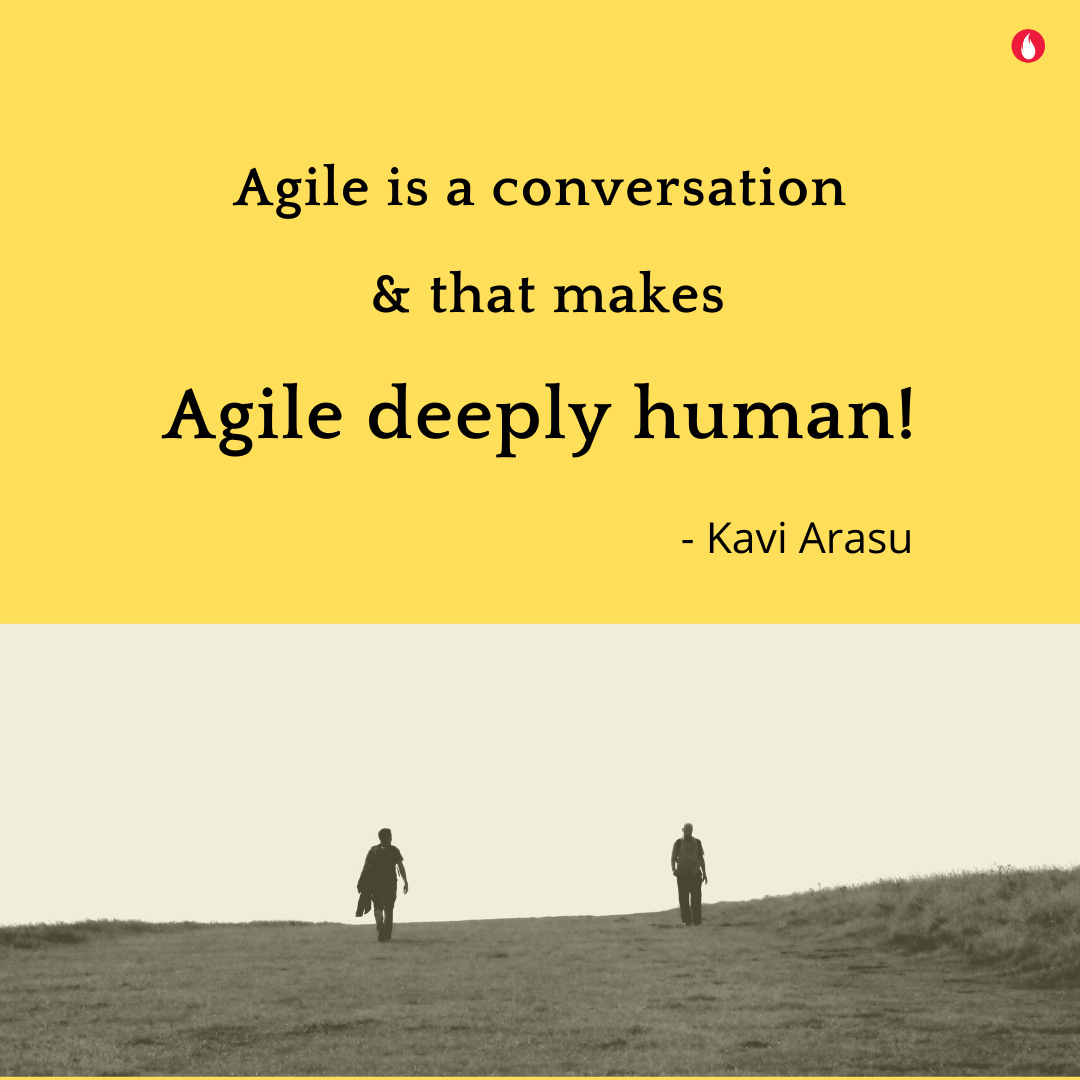
That is it from the Agile OWL this edition. You can read the web version of this post here . Head out to www.flyntrok.com and our social handles @flyntrok for more stories from the world of Agile.
See you next fortnight, would love to hear from you . Stay Safe.